
Story Trumped Gameplay On My Top-Ten List This Year

A wealth of amazing games released in 2012, which made coming up with a list of my ten favorite titles harder than most years. When the dust finally settled, I had a surprising realization: At the top of my list, story beat out gameplay.
The fact that someone would favor a strong story over gameplay might not sound that surprising, but it is for me. I've always considered gameplay to be the most important aspect of any game (or so I thought), which is one of the reasons why I'm consistently more interested in open-world titles than linear or heavily scripted games.
Furthermore, I've come to place less and less value on video game storytelling over the years. A story can only be so engrossing when all your protagonist does is run around and shoot things, and the more time a game spends telling a tightly scripted narrative, the less time I get to spend actually playing it. When David Jaffe told an audience at this year's DICE summit that creating a game driven by narrative is a bad idea, I agreed. I'd rather run around in a story-free sandbox (Minecraft, anyone?) than watch a bunch of cutscenes any day.
Then I reexamined my top-ten list from this year:
1. Mass Effect 3
2. XCOM: Enemy Unknown
3. The Walking Dead
4. Borderlands 2
5. Far Cry 3
6. Hitman: Absolution
7. Journey
8. Assassin's Creed III
9. Halo 4
10. Gateways
Not only did Mass Effect 3 win out as my game of the year, but in the last few days before we went to print, The Walking Dead shot up my list to number three, thanks to its emotionally gripping conclusion.
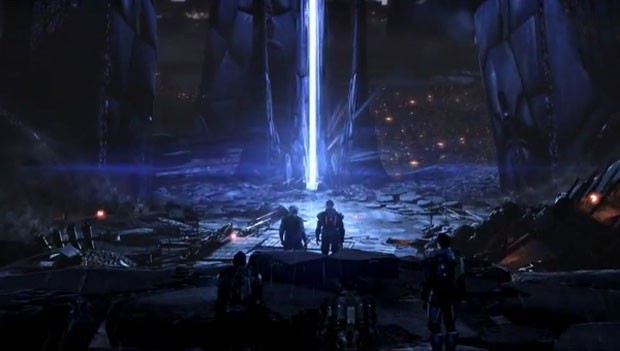
Mass Effect 3 won the top spot primarily because of its story and characters – I enjoy its gameplay, massive scope, and fast-paced multiplayer, but the real draw was concluding the epic story that I've been driving with my own decisions for the past five years. When I compared Mass Effect 3 to XCOM: Enemy Unknown – my other GOTY contender – my memories of Commander Shepard's sacrifice, Mordin's redemption, the Quarian/Geth standoff, and a dozen other story threads pushed Mass Effect 3 over the edge.
The same goes for The Walking Dead. The games that landed below Telltale's episodic masterpiece have considerably more complex and engaging gameplay. But when I reached the end of Episode 5 and realized just how much Clementine and Lee meant to me, the dynamic moments I had experienced in Borderlands 2, Far Cry 3, and Hitman: Absolution paled in comparison.
I never expected to favor games that I enjoy for their stories over games that I enjoy for their gameplay, but there are a few mitigating factors that make it easier to sleep at night. For one, both Mass Effect 3 and The Walking Dead have highly malleable narratives – I'm not just being told what to do or spoon-fed a one-size-fits-all story. My choices matter, which make the stories a lot more personal and impactful than the typical video game yarn.
The other aspect worth noting is that every other game on my list is there because of gameplay. This includes XCOM; even though much of my love for Firaxis' acclaimed reboot can be attributed to the personal stories of my beloved soldiers, they emerged entirely from gameplay. In that sense, XCOM is an exciting example of the direction I'd like to see video game storytelling go – but it still wasn't enough to overcome my fondness of Mass Effect 3.
While I'll still gravitate towards open-world titles that are driven primarily by gameplay, Mass Effect 3 and The Walking Dead made me realize that video games can in fact be a powerful storytelling medium. I look forward to seeing what stories 2013 offers gamers, regardless of where they may fall on my top-ten list for next year.


