Please support Game Informer. Print magazine subscriptions are less than $2 per issue
Why Changing The Mass Effect 3 Ending Is A Mistake
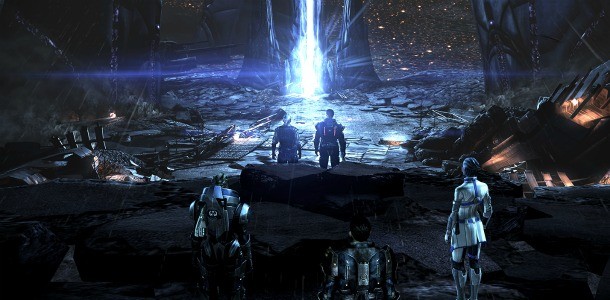
Response to the end of Mass Effect 3 has been volatile to say the least. As with all games, players are free to love or hate the ending for whatever reasons they see fit – but the demand from angry fans for a new ending is unprecedented. BioWare complying with these demands, in some form or another, is also unprecedented, and is a goodwill tactic I believe will likely backfire. Not just in the sense that BioWare may compromise its artistic integrity to appease a disgruntled section of its fan base. I think it will blow up in the face of gamers.
Warning: There are major Mass Effect 3 spoilers ahead.
The initial shock and anger that erupted on the Internet in the days following the release of Mass Effect 3 has given way to more thoughtful discussions of the trilogy's finale. In addition to innumerous critical dissections from fans and detractors alike, we've also seen gamers interpret the endings in many different ways. These different interpretations are possible because the endings are fundamentally ambiguous. The final minutes task you with making a choice that will potentially affect the Mass Effect universe for thousands of years to come. Rather than trying to summarize the ramifications of your choice like the ending of a Choose Your Own Adventure novel ("You destroyed all sentient life in the galaxy, but your offspring will continue the cycle. Better luck next time."), BioWare left each of the three final sequences open-ended, while still conveying the basics: The Reapers leave, transform, or explode, your beloved crew survives, and Shepard goes down in a blaze of glory (or doesn't?). The rest remains unwritten, and is left for you to ponder, dissect, and discuss.
As we have already seen, this ambiguity has given birth to some radically different interpretations. The most popular alternate take on Mass Effect 3's ending is the indoctrination theory, which suggests that the entire final sequence takes place in Shepard's mind as he or she fights against the influence of the Reapers. While I don't believe this is the "true" ending, I do believe those final moments are open-ended enough to make it a possibility, and that the details BioWare included intentionally or otherwise make it a theory worth considering. In that sense, it's not a matter of whether it's the "true" ending – it's simply not my ending. The people who believe the indoctrination theory are 100-percent convinced of their beliefs and are just as satisfied with their choice as I am of mine.
Now, thanks to the backlash of fans, that could change. If BioWare manipulates or further adds to the endings, the company runs the risk of negating the analyses and conclusions that gamers have already come to. What if the new downloadable content disproves the indoctrination theory? Those who see a deeper meaning in the minutiae of Shepard's final stand will be let down. What if the new content supports the theory even further? Fans who believed they already understood the ending and had accepted it will feel cheated.
Whether or not the final sequence takes place in Shepard's mind isn't the only issue that's at stake. Players made their fateful final decision based on the evidence they had at the time, and the conclusions – no matter how sparse or recycled their variations may be – also carefully support a variety of interpretations.
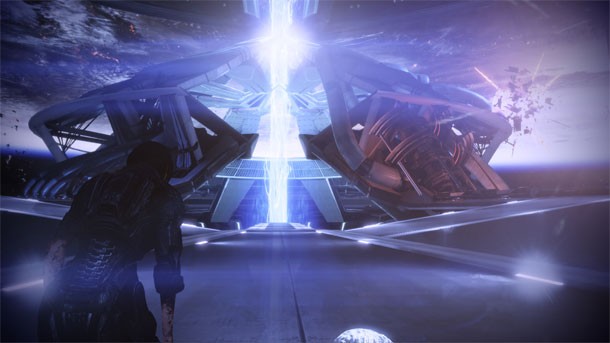
At the end of the game I chose the "green" option, synthesizing all organic and synthetic life based on the rationale that it was the one true way to end the cycle of violence. My fellow editor Jeff Cork opposed the green ending on the grounds that merging organics and synthetics is essentially the process that created the husks. Instead, he chose the red option: To wipe out all synthetic life from the galaxy. Who was right?
According to the endings as they are now, both of us. You can call that a copout on the part of BioWare, but based on what I saw, my ending is a happy one. For Cork, the red ending is still the right choice.
But what if BioWare adds something to the green ending to bolster Cork's view, and it turns out I really did subject all life in the Universe to some sort of synthetic enslavement? Conversely, what if the extra content reinforces my decision, and Cork wiped out the entire geth species for nothing? Either way, BioWare would be alienating players who thought they were making the right decisions – as well as avoiding the wrong decisions – only to be told otherwise by new content that wasn't originally meant to be canon. If, on the other hand, the new scenes don't alter the final decision in any significant way, it will only further enrage the players who were demanding a new ending. Even something seemingly innocuous like explaining how your crew ended up back on the Normandy could disillusion some players, as proponents of the indoctrination theory point to it as evidence of the finale's dreamlike state.
To reiterate: I don't blame anyone who didn't like the ending of Mass Effect 3. People can no more control their emotional response to something than they can control someone else's reaction to the same event. Players who hated the ending have a right to be upset. They don't, however, have the right to demand a new ending. By potentially changing the ending – even if that just means answering questions BioWare originally intended to leave unanswered – the developer stands to upset the gamers who are already happy with how their multi-year adventure played out.
And those players do exist. The comments section in our Spoiled! episode for Mass Effect 3 contains a significant amount of players who support and are pleased with the game's ending (even if they are in the minority). Whether they see hints of a larger conspiracy, are content with the sacrifices they made, or have their own ideas of what their actions mean for the Mass Effect universe, BioWare's pledge to "answer the questions" and provide more clarity for the final sequence may contain answers those players don't want to hear. Moviegoers crucified George Lucas for changing elements of the Star Wars trilogy that clashed with the established story fans already knew. Will BioWare make the same mistake? We'll find out when the developer provides further information on its "content initiatives" this April.
I’d like to ask you to support Game Informer’s continued coverage of games with a subscription. For less than two dollars per issue, we mail you a full year of 10 print magazines, each with cover stories and preview features filled with exclusive details about the most exciting upcoming games. We profile and interview game creators. We look back on the rich history of gaming, and we celebrate what’s next.
Here on the website, we offer much of our content for free, including game reviews, daily news, videos, event coverage, and more – all with minimal ads.
We do so with a small editorial team, alongside contributing paid writers from around the world – over 65 individuals from 9 countries around the world, just in the last couple of years.
It’s not possible without support.
In a time when game makers and games coverage have faced hard struggles and layoffs, the future of this 30+ year magazine and community is at risk. Our new standalone magazine subscription is the number one way you can keep us alive – and we believe you’ll get a pretty fantastic gaming magazine in your mailbox every few weeks for your trouble.
Thank you.