Switch Lights

The lights are on

What's Happening

Ken Levine To The Video Game Industry: Grow A Pair
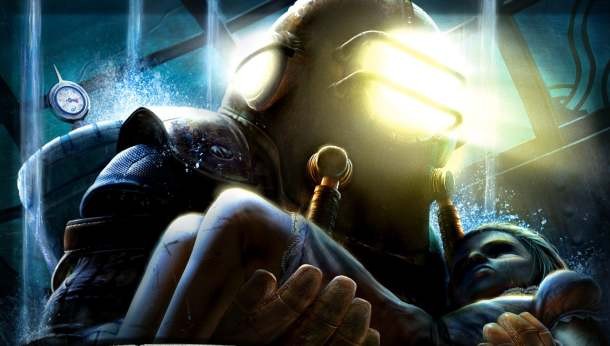
[This editorial originally appeared in issue 207 of Game Informer and is written by Ken Levine, a founding member of Irrational Games and one of the minds behind BioShock.]

Since Roger Ebert wrote a post a few weeks ago entitled "Video Games Can Never Be Art," the game-o-sphere has been abuzz with a broad range of rebuttals, assents, teeth-gnashing, and spleen venting. Ebert spends several thousand words making it very clear that video games aren't worth his time. Even the developer Ebert name checks in his article (Kellee Santiago from thatgamecompany) gets in on the act. The very first line of her response proclaims "Roger Ebert wrote an article about me."

Now excuse me for asking, Kellee, but you are an accomplished game developer. You are a USC alum. You are feted by your peers and your fans. You are coming off Flower, an impressive release that garnered the attention of the entire industry. You're giving speeches at TED. You're a star. And now you're telling me that a watermark in your career is that Roger frigging Ebert deigned to slow down his chariot long enough to notice you? And not simply notice, but vigorously endeavor to establish that your career, your work, and your passion are essentially beneath his notice.

I read another thoughtful open letter to Mr. Ebert on a prominent gaming blog that, before getting around to effectively saying, "You sir, are a film critic, not a game critic, so piss off!" spends several paragraphs name-dropping great filmmakers, as if to say, "See, Ebert? I know film, so I'm worthy of your respect. Take me seriously!"

Jesus, Mary, and Miyamoto! How insecure are we as an industry that we rush to seek validation not from our own peers, not even from creatives in other fields, but from critics in other fields, to tell us if what we're doing is worthy of notice? Look, I was in high school once. I spent the entire four years trying to match up with what I thought other people thought was cool and worthwhile. And I was miserable because the things I loved were not deemed valuable.

Dungeons and Dragons? Lame!

Video games? Nerdy!

Comic books? Pathetic!

And so I hid my passions. I tried to fit in. I played sports and was terrible at them. I tried to make friends with a collection of people whose only interests in the world amounted to Molly Hatchet records and Marlboro Lights. I tried to make myself a part of things I didn't care about and sought the approval of people who looked down on me.

And I was miserable. The sad truth is that once a new form of media shoots out of the womb, one of the first impulses it seeks to fulfill is validation. Like me! Approve of me! Respect me!

Hey, I get it. I went to Vassar. I like a vigorous round of Socratic wankery as much as the next liberal arts undergrad. But what I can't stand is the insecurity. Are games art? Will they become art? What stage of development are we in as an art form? Are they more akin to George Melies' A Voyage to the Moon or Welles' Citizen Kane? What methodologies should we investigate to make a proper determination between the state of video games, Aristotelian aesthetics, and Robert McKee's definition of good writing?

Here's my answer in three simple steps:

Remove the beret from the top of your head.

Throw said beret out the window.

Light a fire. Into that fire toss your copy of Aristotle's Poetics.

Crack open a two liter of Mountain Dew. Snap into a Slim Jim. Proceed to Xbox Live and shoot your best friend in the head with an M-16.

You're a gaming geek. Be proud of that. You don't need the "by your leave" of Roger Ebert, your loving parents, or the Library of Congress to validate your passion.

The world is changing. I've spent some time around Hollywood people lately, and I've even thought of trying my hand at screenwriting again. (I was a film scribe back in, oh, 1871 or so.) But many studio exec types have told me that their dream is to have some big film director work with me to make a video game.

My response was, "Why on Earth would I want to do that?" The notion is as ridiculous as me calling up an established film director and saying, "Hey pal. I've never directed a film before, but how about I show up on set tomorrow and take you to school?" Do you really want two egos like me and some hotshot film director butting heads over health station recharge rates or jump heights? Honestly, I'd expect that 10 minutes into the first meeting they'd start to look like somebody who realizes they just mistakenly got on the wrong -- and very lengthy -- inter-continental flight.

Consider last E3, when James Cameron spoke at the Ubisoft event. Now, I love James Cameron. He's the man along with George Lucas who really created 90 percent of the methodologies for telling nerdy stories in big budget movies. I constantly name check him and reference his work in story meetings at Irrational. You put him and the Coen brothers in a room, and I'd have trouble deciding which one I'd want to make out with first.

But why was he pitching the Avatar game and not the guy who actually built the d**n thing? Look, if a BioShock movie gets made, I'm sure there might be some people who would be interested in what I have to say about it. But the focus would rightly be on the folks who made the frigging movie.

Why does the rest of the media world put the gaming baby in a corner? Because the game industry has an inferiority complex. We know that the movie, television, book, and even comic book guys look at us like we're some kind of junior varsity version of themselves. "Hey, video games! Aren't they cute? We should make one of them!"

And why do they think of us this way? Because we encourage them to. "The New York Times ran a page 37 story on GDC. Somebody call my parents!" "Roger Ebert said we're not art. Get me my smelling salts!"

Do games owe a debt to popular culture? Absolutely. I can say that I am the biggest media w***e who ever walked this green Earth. But popular culture today is gaming culture. The social networks and forms of interaction of the Internet didn't gestate at some university or film studio. The language of today's youth wasn't created by the Beatles or Public Enemy. The ways people connect to each other through extended networks weren't conceived by some genius at General Electric.

No. All of these things sprang from the nerd-o-scape. They grew up on Usenet and tech blogs. They sprung to life alongside headshots and tea-bagging. They evolved naturally through a group of lonely dorks looking for people who shared their nerdy interests.

We don't owe anything to anybody. The future of entertainment is being envisioned not just by the games industry, but by a confluence of developers and gamers who've interacted on BBSes and the Net since our hobby began. And we're just getting started. Wait until we have had the time to develop that film and television had. We'll either be ruling the world, or we'll be the Eberts, writing dismissive essays about the newest kind of media, which of course will be irrelevant and shallow. That is something that we must not do, because that kind of thinking is the first step on the path to irrelevance.

But today is not that day. Today is our time to realize the power of the medium we all love so much.

To paraphrase the elder Lebowski: The revolution is over, Mr. Ebert. The nerds won.

Comments
  • I liked that in the magazine when I read it, it was a humorous take on the debate.

  • ***, i guess you're right.

  • There are three things that distinguish art from everything else in the world, and this is my personal feelings on it

    1. Art is anything that inspires strong emotions that are not expressed though language or reaction, but are felt deep inside us.

    2. Art is anything created to teach a message or otherwise show the viewers something that cannot be expressed.

    3. Art is creative, and unexpected, it is radical, and yet also conservative, it follows only the laws that the artist says it shall and it invokes something that cannot be described in full.

    As far as I'm concerened art is the medium through which humans express the most, far more than any conversation, or debate could. It is both the way the conservative tries to achieve true beauty, but the radical would use to make a stand and say "I am different". And is not that the true meaning of art, to be open-minded and accepting of that which is "different". If the artist cannot accept that there is a new "radical" form of art in videogames then they do not grasp the fundementals of art: acceptance.

    I do not need others to approve of my feelings for what is art, but if a game such as Bioshock can inspire the human mind to reflect on it's own self destructive and creul nature, as much as "The 3rd of May" by Goya or as much as "Guernica" by Piccasso (who was a "radical" during his time) then by what means do you claim it is not art.
  • I definitely feel this response. Ebert overstepped his bounds and tried to crush a fledgling behemoth. It's way too early to write gaming off as serious media, because gaming is really just getting off the ground. With the level of interactivity available currently in gaming and the insane amounts of possibilities, there is no ceiling that gaming can't smash through - especially if it is imposed by pompous jack*** critics.

    And most importantly, gamers and the gaming industry have nothing to prove. Games are important because we love them and we want to see them grow. Nuff said.

  • *** right.

  • Wow I understand people are pissed, but the guy went on saying how sorry he was for making a unjust remark... Who even cares what this @ss thinks in the first place?? I wouldent even trust his advice in movie's...
  • I agree. Why must the gaming world seek validation from everyone else? As gamers, we know what we like and if everyone else doesn't like it, that's their opinion. As for Roger Ebert, I think the guy is so high on his own farts that he forgets that some of the greatest movies have come out of nerd-ery! Whatever, it's not like we need validation from Ebert to tell us that games are amazing.

  • This article rocked.  Levine had great points, and I'm glad GameInformer decided to post this online.  I honest to God wish I could be around when video games will have been around as long as other media outlets.  Considering how far video games have come already, my kid's kid's will be extremely lucky.

  • So as I had said, why do people care about Eberts opinion?

  • You guys know that there is a BioShock film in the works, right?

    It's going through some budgeting problems at the moment right now though, since they already used up all of their money or need more or something.

  • I love this. The gaming community does not need a validation from Ebert or rather, from anyone else. We can think for ourselves and we each have our own opinions. Ebert's comments are no different. If it's negative, we brush it off and move on. End of story. There should not have been such a huge reaction to this. Ebert's no game expert, anyway, so that alone should have been enough for people to ignore his opinions.

  • What's funny is I don't know even know why we're having this discussion. The established art critics and Mr. Ebert have already lost. You know why? Because every new art form WILL NOT FIT THE OLD DEFINITION. Every time a new art form was introduced by a new artist, all the art critics screamed, "THIS WILL NEVER BE ART!" And guess what, THEY WERE WRONG.

    Video games just don't fit the tried and true old-school art definitions and that's fine because Video Games will make a new category and the discussion will end. I don't like abstract art and I don't consider it art, but guess what THEY HANG "ART" LIKE THAT IN MUSEUMS.

    Give it ten years and we'll be debated about the next art form and whether it should be defined as "art" or not and video games will be included. Mark my words.

  • I'm surprised Ebert ever said this. He always seemed a little more avant-garde than that, but decrying video games as artless is just myopic.

    A lot of filmmakers, movie buffs, etc. posit that the cinema is still somewhat in its infancy compared to the novel, fine art, or music. It's had a good century to mature and evolve. Video games are then by comparison still in the womb, but they've been conceived. I think the backlash his statement elicited bespeaks a ringing understanding within the gaming community that this medium is, in fact, art, but it has a long way to go.

    I guess it's about a label really. How does one define art? It seems to me that it is almost an inherent quality to say that video games are, or at least can be, art. Not every painting is the Mona Lisa, but then again not every game is (insert the qualifying production here).

    Video games are burgeoning big-time. Give it a decade. This debate will be obsolete by then.

  • worthless *** article~

  • What an awesome article. Totally summed up my thoughts about this whole debate.

  • I'm looking forward to the day that the Gaming Industry will be completely on its own level and will be devoid of shameful events like the Spike VGA's, Ebert, that mom back in january who blogged saying video games were made by Satan:

    http://themomblog.ocregister.com/2009/12/27/video-games-were-invented-by-the-devil/42149/

    The industry was Inferior when it originated, but when we come to a day an age where Nintendo invests more money into creating the Wii than the U.S. put into public education.

    Or when Franchises like Halo and Call of Duty make more money in the first 24 hours of their release than over 95% of the film industry could ever do. (Halo 3 at 175 million and Call of Duty Modern Warfare 2 at 310 million both within the first 24 hours)

    Or when Killzone 2 alone was a 4 year project costing Sony Over $60 million in investment. Its time Hollywood gets off their high horse and accept that the Video Game industry is for real and for the most part is tired of being treated like it is.
  • Poor basturd.
    The man obviously has no vision and can barely string together a coherent sentence.
    Him and his brainless friends like Todd Howard.
    Get it together, Levine!
    ....He probably hangs out with the guys at Rockstar Games too cuz all there stuff sux the same!
  • Hearing this...

    makes me think of that critic that said Rock n' roll would never catch on. I'm thinking that this is going to be the same situation and this guy is going to end up on the "dumbest quotes of all time" page.

  • Obviously people get angry when they are told what they love is not art. But regardless, I think its not relevant if games are considered art or not, first and foremost they need to be awesome games. F**k art.
1 2 3 4 Next