
007 First Light headlines our newest issue about the most anticipated games of 2026 and beyond. Subscribe now!
Horror Story: An Oral History of The 7th Guest

When Trilobyte founders Graeme Devine and Rob Landeros sat down to make their first game together, they knew they had the perfect idea. Using the untapped potential of CD-ROM technology, they planned to incorporate full motion video of live actors into a horror-themed puzzle game. Their intuition proved correct. Upon its release in 1993, The 7th Guest was heralded as a technical marvel, selling more than two million copies and pushing sales of CD-ROM drives through the roof. Bill Gates even called it a “new standard in interactive entertainment.”
However, behind the scenes, The 7th Guest was the eye of a developmental tornado. Fraught with delays, budget issues, and technical challenges, the game drove apart the two friends who came together to create it. Devine and Landeros set out to design one of the best horror games ever made, but the development process turned out to be the most terrifying experience of all.
VIRGIN INNOCENCE
Graeme Devine: In the early ‘90s, Mastertronic– which was eventually bought by Virgin Games– called me and said, “Do you want to come out to the States for six weeks? No one there knows how to turn on a Commodore 64. It's all business people.” I was, like, “Sure. That sounds like a ton of fun.” That was 24 years ago. I never went back.
Rob Landeros: I met Graeme while working for Virgin Games. He was head of the programming department and I was head of the art department.
Devine: We were stuck in a room for nine months together, almost 18 hours a day. We got along great. We had a lot in common. We would sit and watch movies like The Shining over and over and over again, and when we'd come to the end of it we'd look at each other and say, “Let's watch it again.”
Landeros: Graeme and I decided to make ourselves the self-appointed heads of new technologies. [Laughs] We might have even had cards printed. We’d have our boss pick up our ticket and hotel room, and we’d jet off to Chicago, New York, L.A. – wherever they were holding a convention.
Devine: We were at a conference in New York, and everyone was demoing CD-ROMs. A lot of people were touting their fast text search engines, which could search encyclopedias in two seconds. They weren’t tapping the technology. Both Rob and I saw it was capable of doing much, much more.
Landeros: After going to four or five of these things, I was feeling a little conscientious about having such a good time on my boss’ dime, and I told Graeme that we should really file a report or something.
Devine: We got out a paper napkin and wrote down some ideas.
Landeros: We both loved David Lynch’s Twin Peaks. We wanted to create a weird, scary, off-the-wall, mystery like that.
Devine: Virgin Games had also just bought Melbourne House, which had the rights to Clue. So at the airport in New York City, we sat and thought about making a game of Clue based around Twin Peaks.
Landeros: It was Graeme’s fault that we didn’t stick with the Twin Peaks thing. He came up with this outline of an evil toy maker who trapped children’s souls in dolls. I don’t know where he got that, but in a few weeks we had a 20-page document about the story, the game design, a few puzzles. The game would be in black and white and go to color as you moved the mouse around. We handed that pitch to Martin Alper, the president of Virgin Games, when he came in one morning. He walked back 45 minutes later and said, “Let’s go to lunch.”
Devine: Basically he said, “I'm going to have to fire the two of you, because there's no way in hell you're ever going to make that game. It's got failure written all over it. Cartridges are going to be the future of Virgin Games.” Then he went, “But I will give you a contract to go make this game.” Virgin thought it would be, like, a calling card product – an experiment with brand new media – like a trophy product.
Landeros: I thought it was strange that he let his head of programming and his art director to go form their own company. But by the time we got back from lunch we realized we were free agents.
Devine: Martin said, “I will let you go make this game on the following conditions: One, we actually make a floppy disk version of this game. That's what will make profit. Two, I can come visit you all the time, so you will not move more than 30 or 40 miles away. Three, you only have six months to make this game.” Those were the three rules. We broke them all.

SETTING UP SHOP
Terror in the Trenches
Graeme Devine did not enter into the world of game development easily. Before he moved to the United States and started working for Virgin, Devine tried to start his own company in England. The trials of game development were nothing like what he expected.
“One of my partners got addicted to cocaine and he kind of fell off the face of the planet with quite a lot of the money,” he says. “Then I made a game for the ZX Spectrum and it sold a bunch. I actually had £25,000 in my bank account in England, which back in 1982 was like a gazillion dollars.”Unfortunately, this was not the end of Devine’s trials. His partners took all of this money out of the bank account without talking to him, which prompted the budding programmer to leave the company. Devine packed up all of his equipment and left, but his partners weren’t happy to see their star programmer walk out the door with most of the company’s computers.
“They threatened to break my legs and to make me disappear…all sorts of nasty things,” he says. “When you are an 18-year-old that can seem pretty intimidating. One day they came to my house to threaten me, and my dad hid behind the door with a golf club, just in case things got rough. Thankfully, they sat down and we worked it out. Then I started the second company, because games are in my blood.”Devine: We didn't know of anyone else doing what we were doing. People on the board said, “The 7th Guest is impossible! It’s entirely impossible to have animation come off a CD-ROM with any kind of quality.” CD-ROMs at the time gave you 150k/second. Now if you get that downloading from the Internet, you get upset. It took the full power of the CPU to give you 150k/second on most machines. The general thinking was that we were doing a fool's errand.
Landeros: Graeme wrote a video player program that would play double normal resolution and played smooth even after video compression. That was the basis for our game engine.
Devine: We filmed the live action sequences in two days above a comic book store in Medford, Oregon. We hired a Shakespeare Society in Ashland, and a film and video society that was an offshoot of that.
Landeros: We were kind of hands-off because we didn’t know about filming and video. It was very much like we were playing the role of executive producers. There's no way you can pull off that kind of production today. Today it would take weeks of planning and weeks of casting and costumes and so forth. But somehow, we managed to get it together inside a week for only $24,000. It was absolutely incredible. It was so cheaply done.
Devine: The actors performed against a terrible blue screen that wasn't even blue; it was blue paper. That's why the ghosts in The 7th Guest have this fuzzy line around them; we couldn't actually get rid of the entire blue background. In the end, it became a feature.
Landeros: Graeme handled all the programing, but I was a fan of puzzle game magazines so I worked on all the puzzles. Our team was small; there were only a couple other people on staff. Six months in, we were still struggling to finish. Then we went to CES in Las Vegas, because Graeme had decided to demo the game for Martin Alper. That’s when everything sort of changed.
Devine: Martin didn't want us to show the game at CES, but we turned up with a build, and Martin wanted us to show him the game using a computer that was demoing Monopoly. However, we were out in the open, so people started to crowd around us. Soon the booth was crammed full of people.
Landeros: I remember showing up late to the show – around 1:30 in the afternoon. Before I even got to the conference somebody said, “Rob, congratulations, man. You’ve got a hit.” I said, “What do you mean?” He said, “Everybody is talking about The 7th Guest. There are crowds around your booth.”
Devine: Along came Roberta Williams from Sierra and she was blown away. She came back with her programmers and said, “See, I told you this stuff was possible, and you didn't believe me!” That’s when Virgin realized that we really had something here.
Landeros: Leaving the show, Graeme and I looked at each other and said, “Well, my gosh, we are sitting on something. We got a tiger by the tail here.”
Devine: During the plane ride back to Oregon, we were both absolutely distraught. Now we really had to finish this thing.

KILLER SUCCESS
Devine: At that point, it cost $100 to burn a CD-ROM, and we were burning dozens of them at the office. The game shipped with two discs, so we had to get the CD crossover actually working. The final puzzles, the upstairs puzzles that led up to the attic – none of those were actually coded.
Landeros: Our initial budget was $400,000. I think we ended up costing maybe $650,000 or something like that. At that time, it was a huge budget.
Devine: We were very, very poor when we were making The 7th Guest. We had to save up and beg to buy this 100MB hard drive that we connected up to a server for transferring files. There wasn't even enough room on that drive to have the whole game on it at once. We had to save stuff out to a tape and then load it back in for the various rooms. It was a laborious process. The game was supposed to be done in six months.
Landeros: In the end, The 7th Guest took us about two years. We were up nights working hard at the end. It is amazing when I look back on it now how quick you can work when you’ve got something to do.
Devine: Games didn’t take that long back then. The previous game I'd made was for the 8-bit Nintendo, and we spent not even a month on that. Maybe six weeks total.
Landeros: There was something in the hunger of wanting to make that game that actually made it possible with the actual setup that we had.
Devine: Virgin Games had set the price of the game at $100, and it came out with this huge box. I guess it's like a modern collector's edition. We didn't think that would sell. Yet, at the end of the first day, I think Martin called us from Virgin and said, “We completely sold out across the country.”
Landeros: The 7th Guest was so successful that everyone wanted it. I think Nintendo bought the rights to it, but they never did anything with it. It was more like a preemptive strike against anybody else.
Devine: Sega had approached us because they wanted The 7th Guest for their Sega CD system, but Nintendo licensed it first – knowing full well that nothing Nintendo ever did would ever be able to run The 7th Guest. We also licensed The 7th Guest to the Phillips CDi, and that version actually came out. We licensed it for the 10D Viz, which I don't think ever shipped, and we licensed it for the Apple Pippin, which I don't think shipped either. If something had a CD-ROM on it, they called us.
Landeros: There was never any work done on the floppy version.
Devine: Virgin made most of the money off that game. We weren't doing too bad; we were doing okay. We got a royalty for sales of The 7th Guest. But it wasn't much of a royalty because it turns out we were terrible at negotiating contracts.
Landeros: The 7th Guest was very successful, so there was a lot of pressure to make a sequel. Of course, then there was too much pressure with The 11th Hour. That’s the one where we really screwed the pooch.

THE BEGINNING OF THE END
Barely Enough Time To Say “I Do!”
The 7th Guest’s development was so harried that Rob Landeros barely had time to fulfill his obligations outside of work – such as getting married. Landeros made a promise to his girlfriend that if she moved up to Oregon with him when he started work on The 7th Guest that he would marry her, but throwing together a celebratory bash proved difficult given the time he was devoting to the game.On Valentine’s Day in 1992, Martin Halper and a couple executives from Virgin traveled up to the Trilobyte offices to hold conference about The 7th Guest. Around lunch, Landeros got up from the table and excused himself. When Landeros returned several hours later and was asked about where he’d been, he explained that he’d walked across the street into a district court and got married.
When we asked Landeros about this tale, he just laughed and said, “Yeah, that’s how busy I was.”
Devine: Initially we wanted to go make a sequel called Egypt. We had grand plans for a completely different IP. But Martin called up and said, “You guys are absolutely freaking crazy if you think you are doing anything but The 7th Guest 2.”
Landeros: We started working on The 11th Hour before The 7th Guest was finished. Graeme was finishing up The 7th Guest so he didn’t have much time to be involved in The 11th Hour in the beginning. I think he was not interested in the first place, because he didn’t feel like it was his.
Devine: As a company, we thought we could do everything ourselves. We thought we could publish the games, we thought we could have an IPO, we thought we could do our own PR. We thought we were invulnerable.
Landeros: Graeme was having a hard time putting The 11th Hour all together. Everyone was sitting on their thumbs just kind of waiting for months and months. By the time it came out, The 11th Hour was incompatible with Windows 95, which had just released, so that was a huge technical issue.
Devine: The 11th Hour was not received well. It was a bit of a disaster. My head got too big. I'm not going to speak for Rob, but I know we both felt we were invulnerable, we were untouchable. That’s when we started down a dark path.
Landeros: I was fired from the company by the board of directors because Graeme and I had different visions about where we wanted to go.
Devine: Trilobyte ended when Rob left. I remember coming in that day, and I was going to quit. I was done with Trilobyte. I was just going to leave with absolutely nothing and give it all to Rob. I came in and told the board member who was at the office and they had this emergency board meeting, and the result was basically, “We fired Rob.” That was not a good day. That was a freaking awful day and a wrong thing. I should have stuck to my guns and left. That was the beginning of the end, because…yeah, I won, but I didn't want to win. I wanted to leave. I was unhappy with the company. At that point, the company was done, although it went on for another two years. After the studio finally closed, I sold Rob the rights to everything Trilobyte ever made for a dollar. I wanted done with it. It was an albatross around my neck. People say I'm stupid for selling it for a dollar, but it probably saved my life. It's good to let go sometimes.
Landeros: We talk a little bit, now. Not much.
Devine: Enough time has passed that you just work it out…you can't hold onto the past forever. I've forgiven him. I don't know if he has, but I would love to go out and have a beer with him and catch up on the times. It feels like it was a different life now. I think we’ve both moved past it.
[This story originally appeared in Game Informer issue 235]
Products In This Article
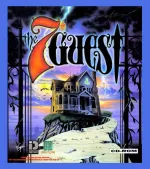
The 7th Guest
Popular Content


Get the Game Informer Print Edition!
Explore your favorite games in premium print format, delivered to your door.
- 10 issues per year
- Only $4.80 per issue
- Full digital magazine archive access
- Since 1991