Switch Lights

The lights are on

What's Happening

How 343 Set A Storytelling Precedent
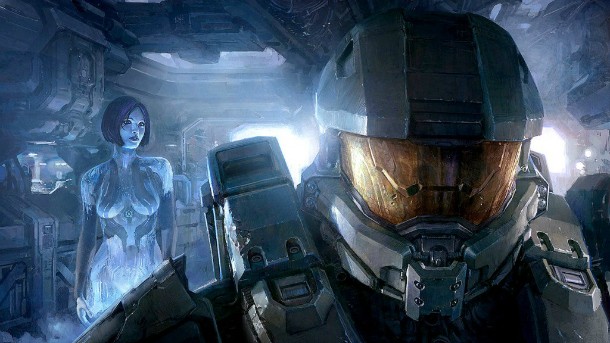
343 Industries had a colossal task ahead of it when Bungie handed over the reigns to its iconic Halo franchise. Not only were the developers expected to maintain the series’ longtime fans with familiar elements, but deliver a fresh experience as well. As it turns out, 343 was up to the task. In some respects, they even outmatched Bungie.

The Master Chief has made his mark on the roster of memorable video game heroes. He’s a cyborg super soldier enhanced with muscle augmentation and a space-age exoskeleton to boot. Everything about him screams lethal; even his Covenant enemies refer to him as the “Demon.” A rumbling voice and stoic demeanor lend his fellow marines confidence, and by extension, that confidence passes to the player. However, these strengths have their downside. You never got the chance to identify with the Chief. Sure, you were just as excited as he was to return an alien bomb to its owners through a plasma-filled space battle, but outside of badass moments like this, he wasn’t that interesting of a character.

His numb personality was balanced by the super AI Cortana, a constant figure throughout the series. Aside from providing useful intel, she brought a personal touch to proceedings that balanced out the Chief’s melancholy. In fact, ironically, the AI is the more human character of the two. Whereas the Chief’s tone and dialogue are steeped in a static sense of duty, Cortana delivers the story on a more relatable level.

The dynamic between the two could have been compelling throughout the whole series. The Chief was the supposed last surviving member of the Spartan II program; without Cortana, the Chief would be completely alone, while Cortana was almost completely reliant on him. Essentially, their relationship was the one constant that both of them could count on.  The Halo trilogy hinted towards deeper seeds in this relationship with Halo 3’s early stages, when Cortana was separated from the Master Chief, but the dynamic never advanced afterwards.

The Halo franchise has always told a story about war on a galactic scale, with the legendary Master Chief at the helm of humanity’s fight. But that story has been cloudy and impersonal. Myriad story elements are explained to the player indirectly, or not at all, in some cases.  Because of this, the overarching narrative always seemed to take a backseat to the immediate objective; 343 changed that with Halo 4.


The newest entry accomplishes several storytelling goals: not only does it present the most focused Halo story to date, but it does so in a relatable way. Of course, for anyone playing the game, a galactic war for the fate of humankind isn’t relatable. But a love story can be. It sounds ridiculous to call the relationship between Chief and Cortana such a thing, but that’s what it has evolved into.  

343 doesn’t shy away from the fact that the duo is far removed from humanity – John is the last of a group created for a lifetime of military training, while Cortana is a machine, albeit an advanced one – and the story excels because of that. 343 does a good job of not throwing a curveball of melodrama and convoluted character traits at you. John and Cortana still experience the cognitive dissonance that accompanies fighting for complete strangers; emphasizing that makes the real mission all the more compelling.

Cortana’s impending rampancy (the end of an AI’s life cycle, brought about by thinking itself to death) permeates the tension of Halo 4’s pacing. The galactic importance of the Chief’s mission is once again the overarching narrative, but it’s all honed in on the race against time to save Cortana. For the first time in the series the Chief seems human. You’ll hear a hint of concern in his voice or a stutter as he asks Cortana “Are you okay?”   

The galactic problems at hand aren’t any less important than the ones in the original Halo trilogy, but they are overshadowed. Here you are, fighting to prevent humanity’s demise, and yet you care more about the personal dilemma at hand. John has never really been human in most senses of the word. He was created for a specific purpose – to fight – and Cortana becomes his first distraction from that duty. There’s a nervous mentality between objectives, as you and the Chief struggle not to worry about Cortana. Each new mission takes you farther away from saving her. In response, Cortana’s attempts to hide her condition and assure the Chief only make her more susceptible to that worry. 

When the ends of both the personal and universal conflicts are in sight, you’ll invariably feel guilt for preferring to save Cortana over the entire human race. The objective of the Halo trilogy was always “Save the galaxy,” but Halo 4 manages to boil that down to a more personal objective. Better yet, it doesn’t seem forced, but instead natural and fluid. The series has never boasted characterization on its resume, but 343 has the opportunity to carry this momentum over to the next title, which can’t come soon enough.

Email the author , or follow on , and .

Comments
  • 343 really did a killer job with Halo 4. While I felt the main antagonist was rather boring, I loved the Cortana and Master Chief angle. They actually made me care about two characters that I never really cared that much about.
  • I am so happy, 343 did a stellar job with Halo 4, it can only get better from here. I look forward to Halo 5!

  • Thanks for the article, Mike. This just makes me more excited to get my hands on the game.

  • Did you know Halo 4 is awesome?
  • My friend is gunna get it soon, it's gunna be alot of fun to play i bet.
  • I can't wait until I get my hands on Halo 5

  • Agree completely. Although it felt a little short and there weren't as many epic moments as I remember from Halo 3 and Reach. I loved taking on two scarabs at once in Halo 3 and the space battle in Reach as well as boarding the Covenant ship were awesome. Hopefully after another replay, I'll love Halo 4 even more. It's an amazing game and I'm glad I got it, just wishing it contained a bit more within the campaign.
  • Guess I should probably get caught up with this series.  Only ever played the first one.

  • While the campaign felt shorter than I had expected it to, it was very well done and I am more than impressed with 343.

  • Glad someone else was thinking the exact same thing I was about this game, man that was a good campaign.

  • I couldn't agree more. I've loved all of the Halo games. But this may be my favorite. Past entries were so focused on just shooting ***, I'll be honest I'm still fuzzy on some of the major story elements from the original games. Considering there were still plenty of older Bungie employees moved over to 343 I felt confident the series would be fine, but they blew it all away for me. This game, both graphically and musically just feels far more epic and cinematic. I like Marty's scores for the other games, but this just felt fresh and fantastic. Some Halo faithful don't like it, but that happens with every game since the original (1 is better than 2, 2 is better than 3, 3 is better than Reach, etc.). I'm just happy to see the series breathe with new life.
  • SPOILERS. Shield your eyes immediately if you don't want to see this!

    IMHO, Cortana's change in appearance made her entirely unrelatable. Instead of me being like "cortana, no!" I was like "Dis B*tch be crashin our ship." In my mind, she was an entirely different person, so I really didn't care at all when
    [SPOILERS]

    she "died" at the end. In fact, I was happy to be done with her.

    The main plot seemed to be equally less appealing. Though I have not read any of the halo novels, I have read about their plots on halopedia, so I knew about the didact and the librarian. And still, I was utterly confused (and still am) about the whole "evolution" plot line that was hinted at in the prologue with halsey (who we never saw again in the entire game) and became a major plot point about halfway through the game. What was all that nonsense about the librarian planning hundreds of thousands of years in advance to specifically have a super evolved human with mjolnir armor come to her? No comprende.

    As far as the threat to the galaxy, there was none. It was a threat against humanity only. One that was not nearly as deadly and to be feared as the halo rings themselves. We lost one city. Oh no. That is definitely totally equal to the hundreds of millions if not billions of people that were killed by the covenant.

    And frankly, all I heard in master chief's voice was an undertone that agreed with me. "wait." and an incomplete and hardly enthusiastic arm gesture was master chief's entire goodbye to her. Yea, he is much more worried about her than the fate of humanity.

    Overall, the campaign didn't feel like halo to me. I wasn't expecting much from 343 ever since I saw Cortana's new model. But I was still disappointed. My hope is that the Arbiter is introduced into spartan ops, as is rumored, and plays a significant role in the rest of the reclaimer trilogy. I think that would very much improve 343's prospects.

    Your thoughts?
  • So far, I'm enjoying it. Although, I'll miss Bungie storytelling Halo. But oh well, they have another big project coming in.
  • they did a good job...indeed

  • I remember when everybody was worried that 343 was going to do a bad job. Well now that the game is out I think 343 did a fantastic job!

  • Let's not forget that we now have a battle for "Greatest Final Line of the Year" in Max Payne 3 vs. Halo 4.
  • [SPOILERS] Honestly... the story for Halo 4 wasn't that great. Not saying that it wasn't good, but I wouldn't ever call it the best out of all the Halo games. The emphasis on Cortana and Master Chief was good; the actual main plot, not so much. I thought the game had a great set-up and a pretty good middle section, but it really derailed for me toward the end. Really, after the scene with the Librarian, the story went downhill. All that stuff about Chief being "planned" for millions of years... what?? And screwing around with his DNA... what exactly was that about?

    And the ending just made no sense - Master Chief magically survives a nuclear bomb that he's standing right next to, because Cortana does some kind of space magic? And what the hell was Cortana actually doing in the first place? I don't know, the story kinda starting seeming like less of a Halo story, and more like something out of Mass Effect. I get that a lot of this stuff comes from the extended Halo lore, but whatever the plot of the game is, it should be self-contained - I shouldn't have to go reading the Halo books or something to understand it. Especially since the Halo games are, and should always be, the primary basis for everything in the Halo universe.

    I get it, the cinematics are beautiful, and it's a really emotional story, but in terms of the plot itself, it's not the best story Halo's ever told. They made the right choice in focusing on Chief's and Cortana's relationship against the backdrop of the larger conflict, but they should have kept all the weird "space magic" (for lack of a better word) in the background as well. Halo is a science fiction story, but even in the original trilogy, that sort of stuff was not as important as the very human conflict that was taking place.
  • I really enjoyed the article, but when you say "John is the last of a group created for a lifetime of military training..." you should probably specify that he's the only Spartan-II in the game, not the only Spartan-II still alive in the Halo universe.
  • They did a fantastic job, I'm glad the franchise is in their hands, I think they can do great with it.

  • I think its great how before the game was released people were wondering if 343 could match Bungie. Now people are asking to what heights can they can push the series.
1 2 3 4 Next