
The Ongoing Evolution of the ESA
Last year the ESA won a landmark Supreme Court decision that struck down a California law and cemented video games' protection under the First Amendment. As crucial as this was, fighting anti-video game legislation is just one facet of what the ESA is about. Renamed the Entertainment Software Association in 2003 from the Interactive Digital Software Association (which was originally formed in 1994), the trade organization is made up of 36 publishers, including the three console manufacturers, Electronic Arts, Ubisoft, Epic Games, and more. The ESA also established the ESRB ratings board, runs the E3 convention, and fights for its constituents' intellectual property rights.
The ESA's involvement in these areas affects both its members and the entire industry, and as the world of video games changes so must this organization. We took a quick look at some of the different issues the ESA is facing and talked to those involved to gauge how the organization is serving its constituents and the industry at large.
This article originally ran in the June 2012 issue of Game Informer (#230)
Video Game Legislation
 The Supreme Court decision that struck down a California law banning the sale of violent video games to minors was the most important court battle ever spearheaded by the ESA. The organization's effort – which included defeating similar bills in other states, filing lawsuits against the California law, and arguing before the Supreme Court against it – is perhaps its most valued contribution to the industry. Whether a company is a member of the ESA or not – the dues-based membership is open to publishers only – the Supreme Court victory benefits all video games, says Gordon Bellamy, the executive director of the International Game Developers Association (IGDA), a separate, non-profit organization that has worked with the ESA in the past. "[The ESA] ensured that developers can create the types of games that they want to make, and do so without government interference," he said.
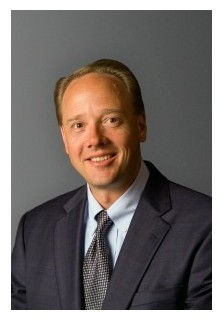
Despite this influential decision, the ESA says its work on the legal front isn't over. "Just because the U.S. Supreme Court ruled in favor of ESA and our position does not mean legislative and legal battles are over," says ESA president Michael Gallagher (left). "To the contrary, we continue to see misguided legislation introduced in states and in Congress – as evidenced recently by a bill introduced in Congress by Representatives Baca and Wolf." If passed, the bill would require all video games to carry a warning label that states: "Warning: Exposure to violent video games has been linked to aggressive behavior," no matter what the game was rated.
The fact that a causal link between video games and aggressive behavior hasn't been proven only underscores the fact that the ESA's legislative work should continue. Bills that are spurious or even unconstitutional are introduced all the time, and the First Amendment protection of the last Supreme Court ruling doesn't mean the issue can't be tested in another way in the future.
ESRB Ratings Board
Warning labels are exactly why the ESA set up the self-regulatory ESRB ratings system in 1994. Although adhering to the system is voluntary for publishers, you can't go into a retail store or download a title through a home console that doesn't feature the familiar "E for Everyone" through "M for Mature" designations (you won't see the "AO for Adults Only" at retail stores). The pervasiveness of the ESRB ratings not only helps the public understand a game's content, but the mere fact that the ESA created it has precluded the need for government oversight of games, similar to the movie industry's MPAA ratings.
The ESRB covers games at retail outlets and those distributed via home consoles, but what about mobile, browser-based, or PC downloadable titles? The ESRB has partnered with the CTIA wireless trade association to institute a voluntary ratings system for six wireless carriers (AT&T, Microsoft, Sprint, T-Mobile USA, U.S. Cellular, and Verizon) using the ESRB's
familiar ratings. Apple's popular App Store and the Google Play marketplace are conspicuously absent, however.
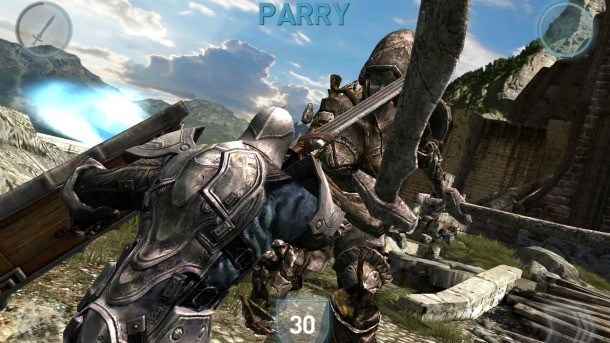
Having worked with Apple for the Infinity Blade iOS series (shown above), Epic Games president Mike Capps says Apple (which could not be reached for comment for this article) has its own particular ratings issues since its App Store features both games and non-gaming apps. The company also sells these games internationally where the ESRB is not involved. Currently, Apple and Google have their own content -rating systems and do their own policing.
Geremy Mustard, co-founder of Infinity Blade developer Chair Entertainment, says Apple's ratings process is "very straightforward," which sounds similar to the ESRB's voluntary system where game info is submitted by the publishers themselves. He says developers submit information about the game, which Apple checks, that then determines its rating. The community can flag inappropriate content after it's released if necessary. "In our experience, we've found this ratings format to be efficient and like the fact that it places more responsibility on the content creator, allowing us to be more accountable to the people who play our games," Mustard says.
Apart from these separate ratings systems, the ESRB also has to reconcile international systems. The ESRB is currently trying to create a more universal system that covers different global ratings systems such as Japan's CERO and Europe's PEGI classifications. This is something that Capps thinks is very complicated given each region has its own standards and cultural differences. It could be solved by having a single rating that when inputted would generate ratings elsewhere instead of a one-size-fits-all approach.
As for PC downloadable titles, in an interview with Gamasutra, ESRB president Patricia Vance stressed the organization's voluntary structure, saying that submissions for ratings are "not something we can force; it's got to evolve organically." Currently, the vast majority of download-only PC games do not carry an ESRB rating.
Fighting Piracy
The controversy surrounding the over-reaching SOPA and PIPA anti-piracy bills in the House and Senate, respectively, put the ESA in a difficult position. While the ESA and its constituents obviously supported the crackdown on piracy, the potential collateral damage to Internet freedom drew the ire
of many gamers. The ESA lobbied for the bills before ultimately dropping its support after consumer backlash intensified. When we asked ESA president Michael Gallagher what the organization could do to modify future bills similar to SOPA/PIPA in order to prevent possible censorship, he wasn't specific, but did cite the importance of a "solution that effectively balances both creative and technology interests."
Before the ESA dropped its support of the bills, ESA members like Epic Games and Trion Worlds and industry groups such as the IGDA and the Entertainment Consumers Association (ECA) took stands against the bills, creating a less-than-united front.
"I don't think we agreed exactly with everything the ESA was doing," says Epic president Mike Capps, who sits on the ESA's board of directors. "We were more aligned than you might think, but we recognized that the group is a democratic one. We all get together and talk about what we think is best to do for the industry, and we get a vote. I've lost some votes on the board of directors, I've swayed some votes, and won some, and I think that's just part of being in a bigger industry with folks who have very different needs."
Capps says that apart from achieving that balance between fighting piracy without curtailing free speech or Internet freedom, the organization could do a better job next time around of presenting the ESA's efforts to gamers. "I think everyone at the ESA regrets that we didn't take a more customer-forward position about explaining SOPA," he says. "The no-subpoena shutdowns – that's really scary to me. We need due process, and I think that was going to be solved. But everyone was already too upset. It was too late to try and re-inform the public by the time it blew up. Lesson learned."
Read on for analysis of the ESA's big video game convention: E3.
The Big Show
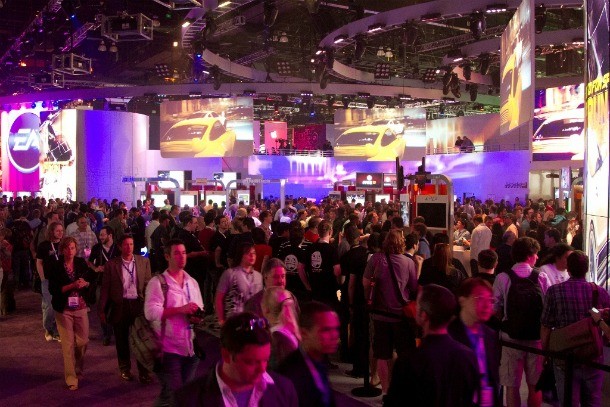
The ESA also puts on the E3 industry trade show, which garners the attention of mainstream media outlets for its reveals of big games, industry announcements, and upcoming consoles. Given the hype and hoopla, however, the scale of the convention might not be beneficial to everyone. Meggan Scavio, general manager of the Game Developer's Conference, thinks that despite the fact that the E3 is a tent-pole event for the industry, it still has its holes. "…From what I can tell, E3 is not really staying up with the trends and emerging technology," she says. "It's still focused on big-budget boxed games."
The ESA hopes to address this issue. Social gaming giant Zynga plans to attend E3 for the first time this year [although not through a booth on the show floor - Ed.], and the ESA says that E3 attendance is strong and, in general, membership is higher than ever. In 2008, notable members like Activision, LucasArts, and id Software left the ESA, and many speculated that it was because they preferred former ESA president and founder Doug Lowenstein over then-new president Michael Gallagher. Since then, many of those companies have still shown their games at E3 even though they aren't official ESA members.
Michael Pachter, managing director of equity research at Wedbush Securities, thinks that regardless of who attends E3 or is a member of the ESA, smaller companies and sectors like mobile and downloadable games don't have to worry about not being represented by the ESA. He posits that if an ESA member like Electronic Arts is active in the social gaming space, for example, then by default they represent the interests in that genre of other companies.
Still, Pachter thinks the more the merrier. "The only reason I think it would be great if Zynga, Activision, and indies all participated is I think you get a better result if you have more input from more people," he says. "More people will come up with a wider variety of outcomes and make things smarter. I know Mike Gallagher – he'd love everybody to be in there. I think the biggest impediment to them representing the entire industry is a lot of guys have different ideas about what the cost of that should be. My understanding is that ESA dues are a function of revenues, so a big company like Activision is saving millions by not participating."
Robot Entertainment co-founder Patrick Hudson, who has had experience in both releasing traditional boxed products when he was at Ensemble Studios (Age of Empires, Halo Wars) and downloadable games at Robot (Orcs Must Die!), agrees with Pachter that his company's interests are adequately represented despite their size and the fact that they can't join the ESA as a developer. When Ensemble was a part of Microsoft, Microsoft was the middleman between the ESA and Ensemble, leaving them free to concentrate on making games.
At Robot, Hudson is more content to carve out his own path. "We went to E3 last year for Orcs Must Die!" he says. "We didn't find that to be a beneficial conference for us to attend. We're much better off attending places like PAX and PAX East. For us, that is hitting the absolute core of people we're appealing to."


